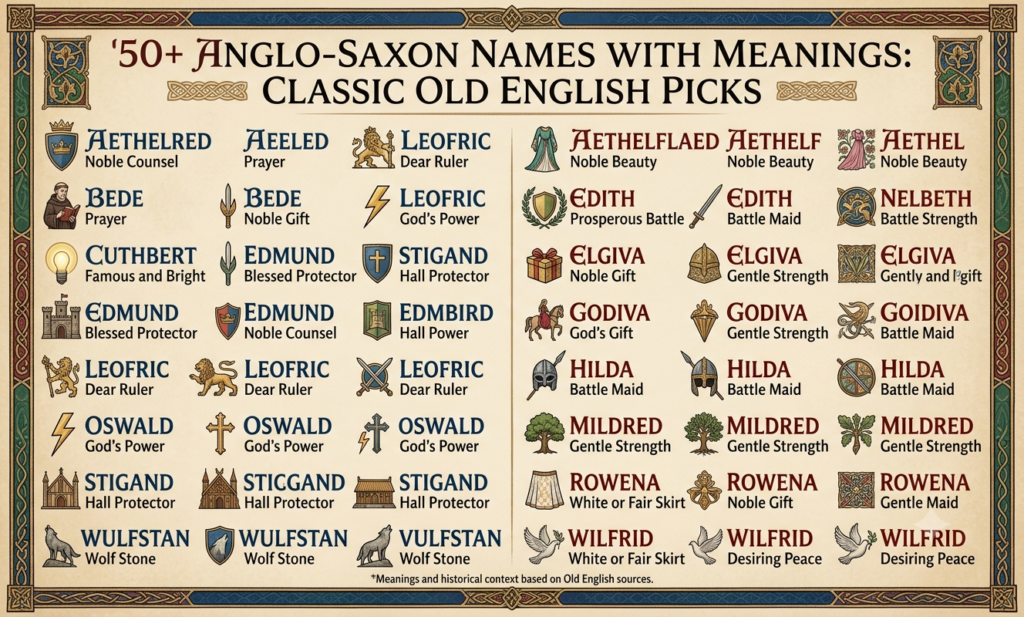
Choosing a name for your baby is one of the most special decisions a parent makes. Anglo-Saxon names carry deep roots in English history and culture. They bring a sense of strength, tradition, and timeless charm.
These names come from Old English, a language spoken over a thousand years ago. Many of them describe nature, courage, or noble qualities. That is why Anglo-Saxon names still feel powerful today.
A meaningful name can shape how a child sees themselves growing up. Anglo-Saxon names offer history along with beautiful meanings. This list will help you find a classic Old English name for your little one.
What Are Anglo-Saxon Names?
Anglo-Saxon names come from Old English, the language spoken in England before the Norman Conquest of 1066. These names were often built from two smaller word parts, each carrying its own meaning. Together, these parts formed names full of strength, nature, and wisdom.
Many Anglo-Saxon names described warriors, rulers, or protectors of the land. Others were inspired by animals, weather, or everyday life. This made each name feel personal and connected to real experiences.
Over time, many of these names faded as new naming trends took over England. However, their roots still shape modern English names today. That is why Anglo-Saxon names still feel familiar even after a thousand years.
25 Anglo-Saxon Names With Meanings
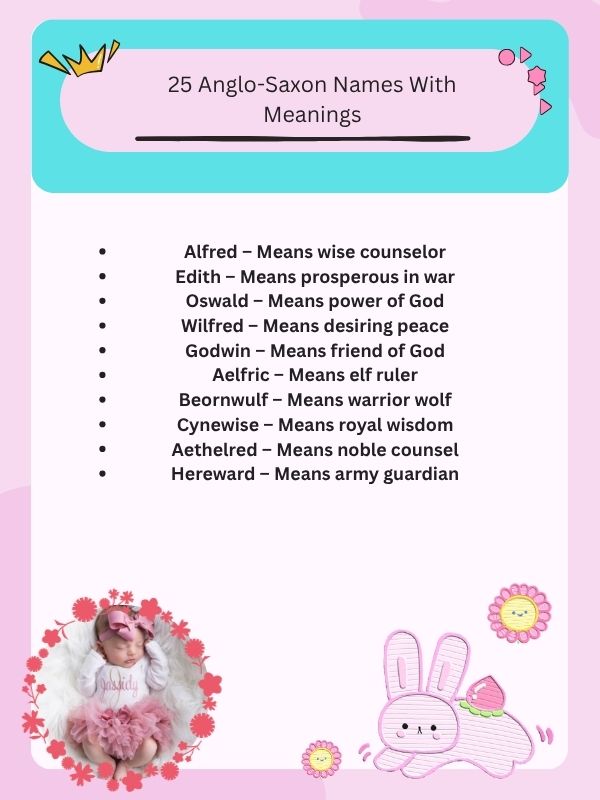
- Alfred – Means wise counselor
- Edith – Means prosperous in war
- Oswald – Means power of God
- Wilfred – Means desiring peace
- Godwin – Means friend of God
- Aelfric – Means elf ruler
- Beornwulf – Means warrior wolf
- Cynewise – Means royal wisdom
- Aethelred – Means noble counsel
- Hereward – Means army guardian
- Winifred – Means blessed peace
- Leofric – Means beloved ruler
- Eadwine – Means blessed friend
- Cuthwin – Means famous friend
- Aelfwine – Means elf friend
- Osgood – Means divine goodness
- Wulfstan – Means wolf stone
- Aethelburh – Means noble fortress
- Beorhtwulf – Means bright wolf
- Cenwulf – Means bold wolf
- Aethelwine – Means noble friend
- Godric – Means ruler of God
- Hildegard – Means battle guard
- Sigeweard – Means victory guardian
- Wynflaed – Means joyful beauty
Anglo-Saxon Boy Names
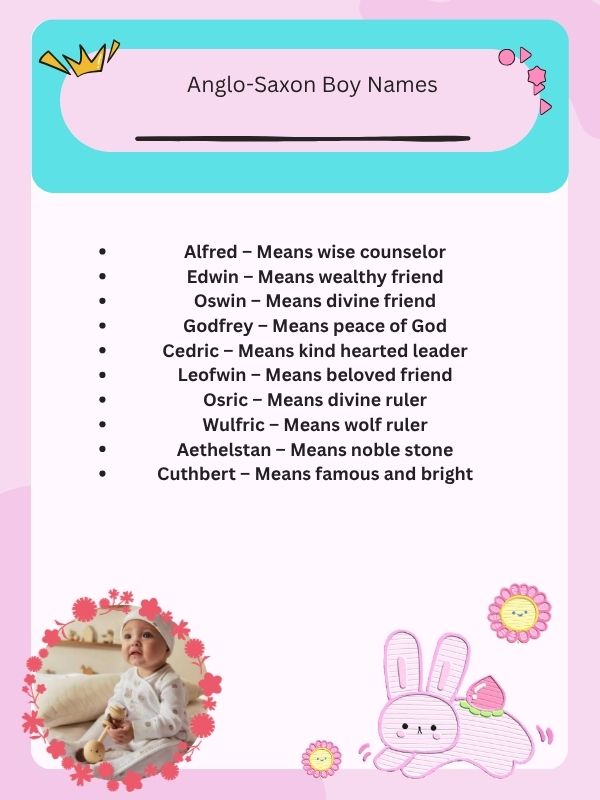
- Alfred – Means wise counselor
- Edwin – Means wealthy friend
- Oswin – Means divine friend
- Godfrey – Means peace of God
- Cedric – Means kind hearted leader
- Leofwin – Means beloved friend
- Osric – Means divine ruler
- Wulfric – Means wolf ruler
- Aethelstan – Means noble stone
- Cuthbert – Means famous and bright
- Beornard – Means brave as a bear
- Eadric – Means blessed ruler
- Harold – Means army ruler
- Aelfred – Means elf counsel
- Edmund – Means wealthy protector
- Osbert – Means divine and bright
- Wulfgar – Means wolf spear
- Cenric – Means bold ruler
- Aethelbald – Means noble and bold
- Sigebert – Means victory bright
- Wystan – Means battle stone
- Godric – Means ruler of God
- Aelfwald – Means elf ruler
- Beornwulf – Means warrior wolf
- Aescwin – Means friend of the ash tree
Anglo-Saxon Girl Names
- Edith – Means prosperous in war
- Winifred – Means blessed peace
- Hilda – Means battle woman
- Aethelflaed – Means noble beauty
- Cyneburga – Means royal fortress
- Godiva – Means gift of God
- Aelfgifu – Means elf gift
- Wynflaed – Means joyful beauty
- Hildegard – Means battle guard
- Eadgyth – Means blessed war
- Leofflaed – Means beloved beauty
- Osgifu – Means divine gift
- Aethelthryth – Means noble strength
- Beornflaed – Means warrior beauty
- Cwenhild – Means queen battle
- Sigehild – Means victory battle
- Aelfthryth – Means elf strength
- Wulfhild – Means wolf battle
- Godgifu – Means gift of God
- Ediva – Means blessed gift
- Aethelgifu – Means noble gift
- Hereswith – Means army strong
- Cyneswith – Means royal strength
- Leoflaed – Means beloved beauty
- Osburh – Means divine fortress
Common Old English Name Elements and Their Meanings
- Aethel – Means noble
- Wulf – Means wolf
- Beorht or Bert – Means bright
- Ead – Means wealth or blessed
- God – Means good or God
- Here – Means army
- Hild – Means battle
- Leof – Means beloved
- Os – Means divine or god
- Ric – Means ruler or power
- Sige – Means victory
- Stan – Means stone
- Win or Wine – Means friend
- Weard – Means guardian
- Gar – Means spear
- Raed or Red – Means counsel
- Cyne – Means royal
- Gifu – Means gift
- Flaed – Means beauty
- Mund – Means protector
Are Anglo-Saxon Names Still Used Today?
Yes, many Anglo-Saxon names have survived into modern English naming traditions. Names like Alfred, Edith, Harold, and Edwin are still used by parents today. They feel both classic and slightly unique compared to trendy modern names.
Even names we consider common, like Edward or Godfrey, have deep Anglo-Saxon roots. Their meanings still carry strength, wisdom, and nobility after centuries of use. This makes them a wonderful choice for parents wanting history with character.
Choosing an Anglo-Saxon name today connects your child to centuries of English heritage. It stands out while still feeling familiar and easy to say. That balance is exactly why these names remain popular even now.
Frequently Asked Questions
What are Anglo-Saxon names?
Anglo-Saxon names come from Old English, the language spoken in England before 1066. They often combine two word parts, each with its own meaning.
What is the most popular Anglo-Saxon name?
Alfred is one of the most well-known Anglo-Saxon names, meaning wise counselor. Edith and Edward are also very popular choices.
Are Anglo-Saxon names still used today?
Yes, many names like Edwin, Harold, and Winifred are still used by modern parents. Their historical roots make them feel timeless.
What do most Anglo-Saxon names mean?
Most Anglo-Saxon names describe qualities like strength, wisdom, nobility, or protection. Many were inspired by nature, war, or royalty.
Are Anglo-Saxon names good for babies today?
Absolutely, these names offer a unique blend of history and meaning. They stand out while still sounding natural and easy to pronounce.
Conclusion
Anglo-Saxon names bring a powerful sense of history and meaning to any baby name search. This list covered classic names, boy names, girl names, and even the word parts behind them. Every name here connects your child to centuries of English tradition.
Feel free to share this list with friends and family who are expecting a baby. A name rooted in history can become a meaningful gift for life. We hope you found the perfect Anglo-Saxon name for your little one.